
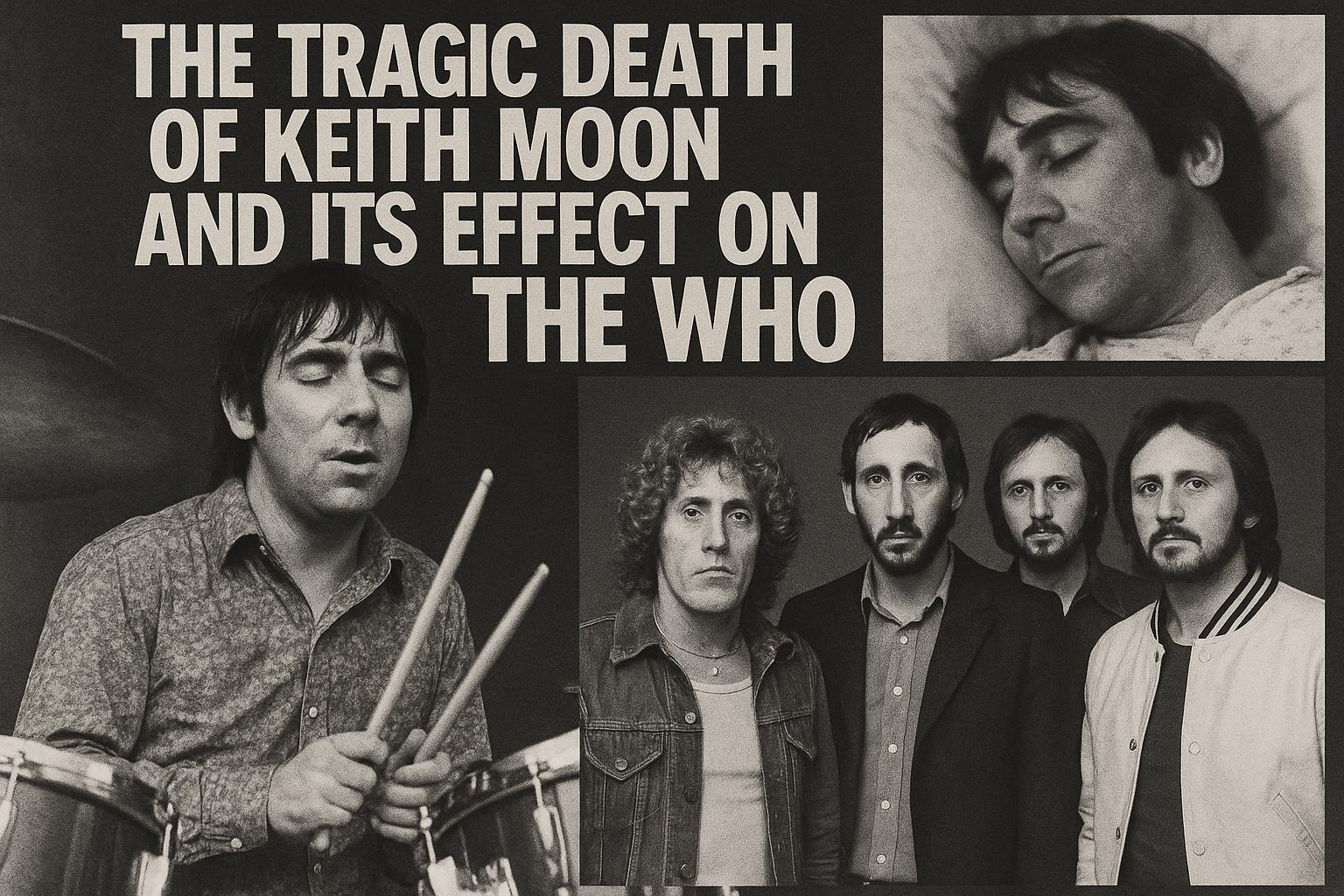
The Tragic Death of Keith Moon
The iconic drummer Keith Moon passed away on September 7, 1978. Known for his wild lifestyle and innovative drumming, Moon was a pivotal member of the legendary rock band The Who. His death was a significant event in the music world, impacting both fans and musicians alike.
Circumstances of Keith Moon’s Death
Moon died from a drug overdose in his sleep at the age of 32, in a London apartment owned by Harry Nilsson, a close friend. The overdose was accidental, resulting from the prescription drug Heminevrin (clomethiazole), which he had been taking to combat alcoholism. The prescribed dosage was exceeded, leading to his premature death.
Moon’s battle with alcoholism was well-known within the industry and among his friends, adding layers of both tragedy and cautionary insight to his story. He had been attending rehabilitation programs, and Heminevrin was part of his treatment plan. However, despite efforts to manage his addiction, the complexities of managing such a condition amid the pressures and lifestyle of a rock star ultimately contributed to the lethal outcome.
Keith Moon’s Contribution to The Who
Keith Moon was instrumental in shaping The Who‘s distinct sound. His drumming style was both frenetic and inventive, pushing the boundaries of conventional rock drumming. Moon’s techniques and approach significantly influenced the band’s musical direction and provided a dynamic stage presence.
His drumming style was characterized by its energy and innovation. Unlike other drummers of his time who maintained a steady, foundational beat, Moon approached his instrument with what some might call organized chaos. He played with a ferocity and creativity that enlivened The Who’s performances and recordings. Moon was known for what he described as “lead drumming,” filling tracks with an explosive power that matched the band’s own evolving sound during the 1960s and 1970s. He was not simply a timekeeper, but a full-fledged contributor to the musical dialogue, adding unexpected fills, an unusual number of drum rolls, and unpredictable rhythms that made songs unique.
Impact on The Who
The loss of Keith Moon marked a profound change for The Who. As a key member, his absence was keenly felt. The remaining members—Pete Townshend, Roger Daltrey, and John Entwistle—faced the challenge of continuing their musical journey without him. Their first album following Moon’s death, Face Dances, released in 1981, was met with mixed reviews.
The band faced an existential question after Moon’s passing: How to continue without a member whose presence shaped who they were as much as their records did? Face Dances was their attempt at an answer, as they tried to reconcile their sound and identity in Keith’s absence. The album achieved commercial success and embarked on bold thematic explorations, but critics and some fans noted that a certain essence, undoubtedly attributed to Moon’s raucous drumming and charisma, was lacking.
Continuing Without Moon
Following Moon’s death, The Who chose to carry on, with Kenney Jones, formerly of The Small Faces and The Faces, stepping in as drummer. This period saw the band exploring new musical directions and ultimately maintaining their status as a major rock act, although some fans and critics felt that the energy and creativity of Moon’s presence were irreplaceable.
Jones brought his own style and gravitas to the band, contributing to subsequent albums and tours which drew significant audience numbers. While serving as a competent musician and a stabilizing force, Jones’s style was more precise and less chaotic than Moon’s, a point that was seen as both a positive and a negative depending on the listener’s perspective. The Who continued with landmarks, such as the 1982 album It’s Hard, yet the label of “post-Moon era” was one the band continually encountered — a testament to Moon’s indelible impact.
Legacy of Keith Moon
Moon’s impact on rock music remains substantial. Drummers and musicians continue to cite him as a significant influence, celebrated for his unconventional playing style and spontaneous flair. His legacy endures through recordings, tributes, and continuous references in popular culture.
Countless drummers view Moon as a hero or mentor, mimicking his unorthodox approach while adding their twists to it. His influence extends beyond technique; it is his overall outlook on music and life that inspires. He is remembered for adding a new dimension to what a rock drummer could be — not only maintaining rhythm but also serving as an agent of flamboyant energy and unpredictability on stage.
The Who’s Ongoing Story
Despite the many challenges following his passing, The Who continued to produce music and tour, adapting and growing with the changing landscape of rock music. Their determination to persevere highlights their resilience and enduring influence in the music industry.
The band has continually embraced new challenges, redefining themselves through changing political climates, technological advancements, and evolving musical tastes of audiences across generations. Each tour, album, and project serves both as a homage to past heights and an exploration of future possibilities. In acknowledging Keith Moon’s contributions while forging ahead, The Who illustrates the delicate balance between honoring history and embracing renewal.
To learn more about The Who, explore various biographies and documentaries available via reputable online resources. These sources dive deeper into the band’s rich history and unravel the complex narratives that have made them icons of the rock world. In unraveling the stories of individual members, their works collectively continue to influence and inspire millions, revealing the multifaceted legacy of a band that stood apart, while at times losing and rediscovering its core essence.
