
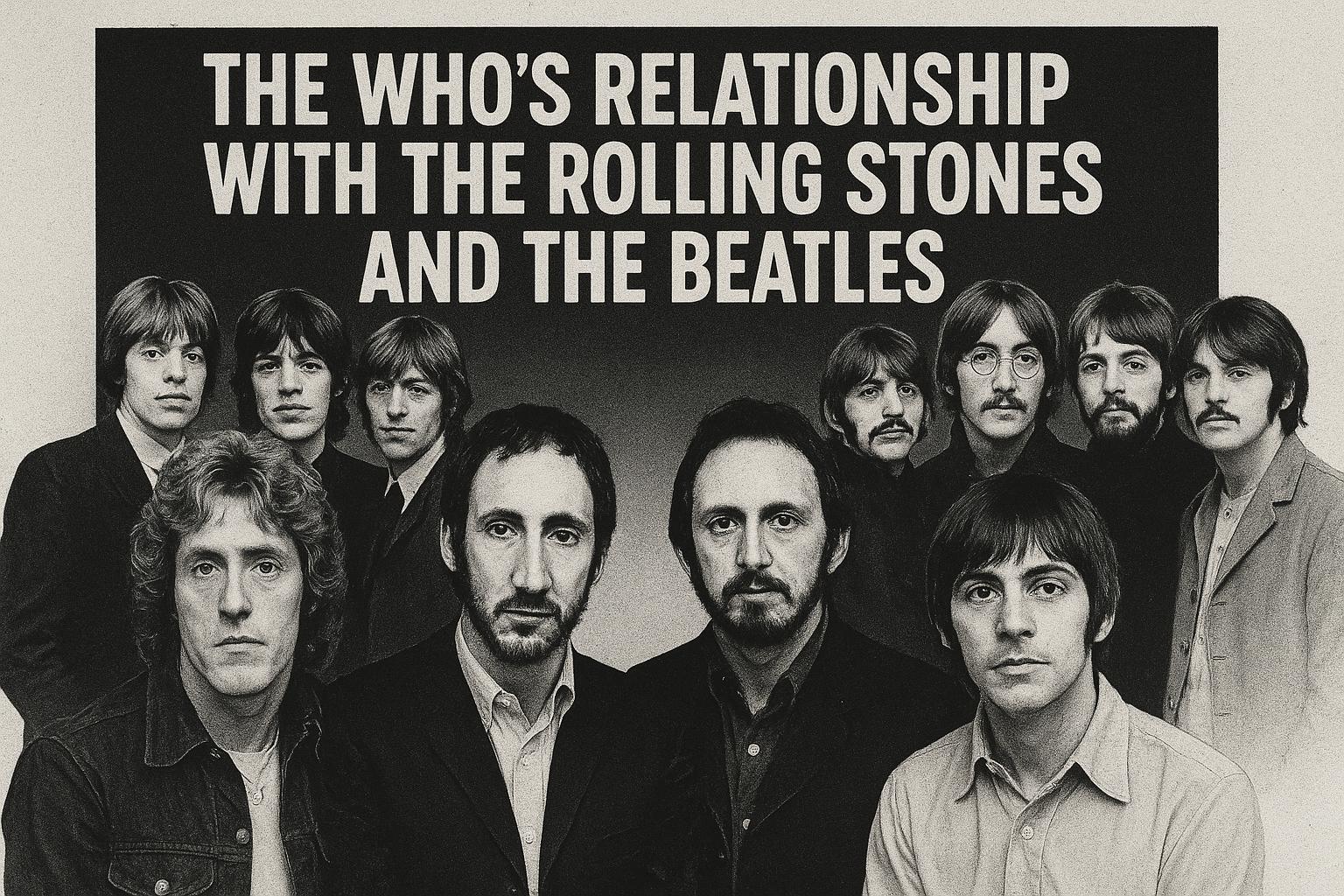
The Who’s Relationship with the Rolling Stones
The Who and the Rolling Stones are two of the most renowned bands to emerge from the British Invasion period of the 1960s. Despite originating from the same dynamic British rock scene, the relationship between these two musical giants has been characterized by a blend of camaraderie and occasional competition. Both bands have wielded substantial influence over the rock music landscape, driving innovation and pushing the boundaries of what rock music could achieve during that era and beyond.
Pete Townshend, the lead guitarist and principal songwriter of The Who, has frequently expressed his admiration for the Rolling Stones. In various interviews, Townshend has spoken about how he views the Stones as a major influence, acknowledging the profound impact they have had on the music industry. The Rolling Stones are often credited with shaping the direction of rock music by infusing it with blues elements, and Townshend has been candid about the respect he holds for their innovative spirit.
The relationship between the two bands has often extended beyond mere words of admiration. They have shared concert stages on numerous occasions, with one of the most notable collaborations being during the Rolling Stones Rock and Roll Circus event in 1968. This event was a gathering of music legends, where The Who’s electric performance stood shoulder to shoulder with the Stones’ own classic showmanship. Such events were not just performances; they were celebrations of the vibrant rock culture that both bands helped to shape.
Keith Richards, the legendary guitarist of the Rolling Stones, has reciprocated this admiration toward The Who. He has publicly expressed respect for their distinctive sound and high-energy performances, acknowledging the unique contributions The Who made to rock music. The camaraderie between the two bands is further evidenced by their mutual connections and frequent interactions within the broader rock music scene of the time. It was a period when collaboration and friendly rivalries flourished, creating a fertile ground for artistic exploration and growth.
The Who and the Rolling Stones: Rivals or Allies?
The broader competitive environment of the 1960s music scene naturally fostered an element of rivalry between The Who and the Rolling Stones. However, this rivalry was predominantly a friendly one. Both bands achieved monumental success in their own right, yet they managed to maintain distinct musical styles that minimized direct competition. The Who’s music was characterized by its theatrical, often explosive approach to rock, which contrasted with the Stones’ more blues-influenced sound. This divergence allowed both bands to flourish and avoid stepping on each other’s toes, so to speak.
The era saw both bands recognizing each other’s talents and using their subtle rivalry as a catalyst for musical innovation. It was not uncommon for bands from that era to spur each other on, drawing inspiration from what their peers were creating. In this sense, while competition existed, it was more a mutual acknowledgement of each other’s prowess and potential than adversarial rivalry.
The Who’s Relationship with The Beatles
Emerging from the same zeitgeist of 1960s Britain, The Who and The Beatles were both emblematic of the British Invasion. This cultural movement saw British bands conquering American charts and reshaping the global music scene. Despite The Beatles’ status as one of the greatest and most successful bands of all time, The Who carved out their own niche. Their innovative approach to music and performances—characterized by loud, dynamic shows and groundbreaking rock operas—set them apart from their contemporaries.
Members of The Who have often spoken highly of The Beatles, not just for their music but also for their role in paving the way for British bands in the United States. Pete Townshend, in particular, has noted that witnessing The Beatles’ success inspired The Who to break existing conventions and experiment boldly with their musical artistry. This motivation helped The Who evolve their sound and explore new creative avenues, ensuring they stood out in a crowded music scene.
The Beatles’ Influence on The Who
The Beatles’ influence on The Who is evident in their shared enthusiasm for studio experimentation and conceptual projects. The Who’s *”Tommy,”* their famed rock opera, bears clear traces of the pioneering spirit The Beatles exhibited in albums like *”Sgt. Pepper’s Lonely Hearts Club Band.”* These works emblemized a period in music where traditional boundaries were pushed, and bold artistic statements were made. Despite adopting some of the Beatles’ innovative tendencies, The Who retained their distinct sound, full of powerful chords and compelling live displays.
Collaborations and Shared Connections
Even though The Who and The Beatles didn’t directly collaborate on musical projects, they shared numerous professional and personal connections within the vibrant music industry of the 1960s and beyond. They were both part of the elite circle of British rock bands and often intersected in social gatherings. Prominent figures like Eric Clapton and other notable musicians of the time frequently found themselves in the same orbit, providing a network of influence and mutual respect among the bands. This interconnectedness not only fostered mutual influence but also promoted a sense of community among the era’s leading musicians.
Conclusion
In conclusion, The Who’s relationships with both the Rolling Stones and The Beatles encapsulate a defining era in rock music history marked by mutual respect and influence. The friendly competition between these bands served as a catalyst for growth, driving each to achieve new heights in their musical journeys. While their individual styles and preferences often set them apart, their combined contributions to music during the 1960s helped define an era. Through innovative sounds and powerful performances, each band’s legacy continues to resonate, reflecting an enduring story of camaraderie amidst an environment of competitive creativity.
