
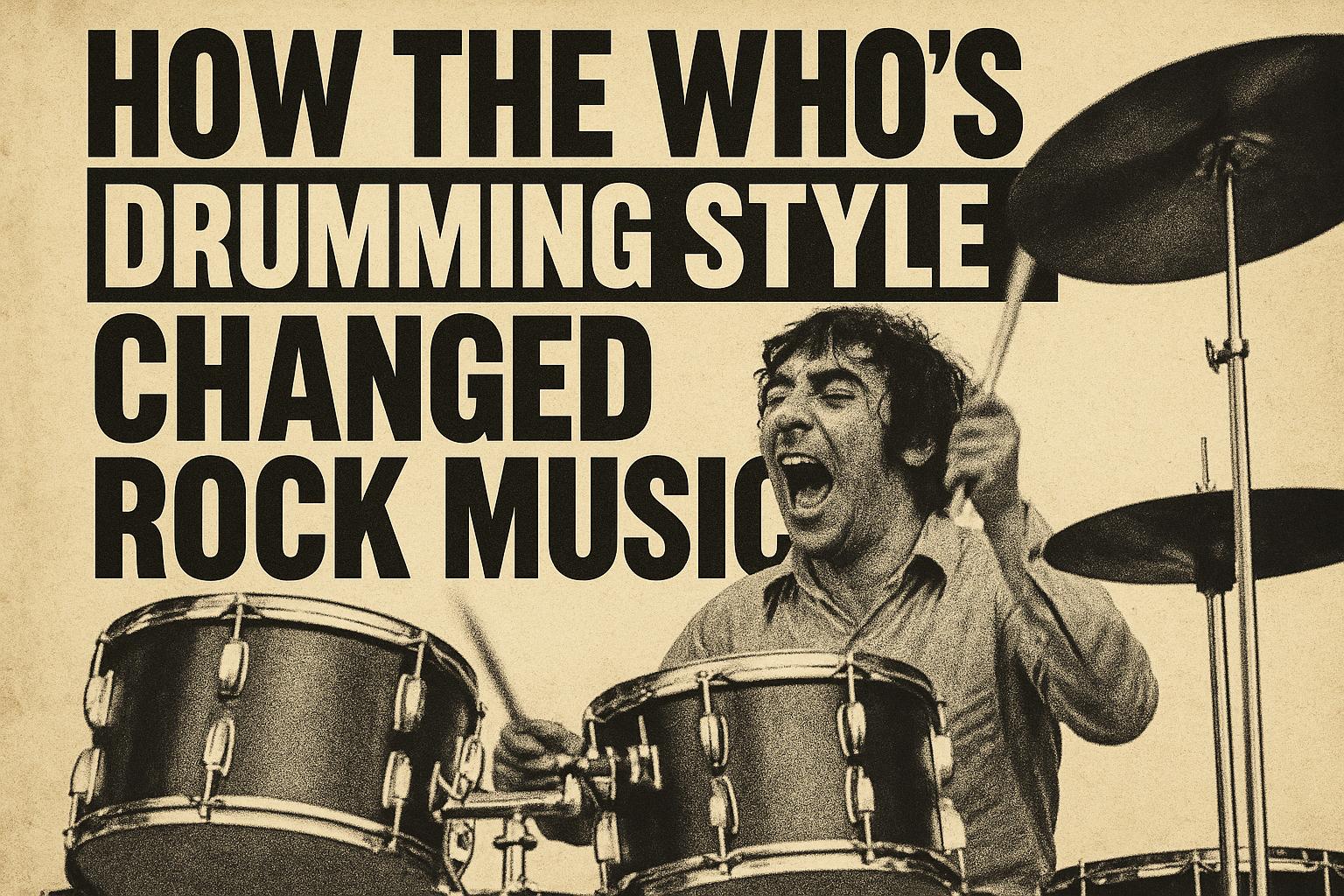
The Evolution of Drumming in Rock Music
The evolution of drumming within the sphere of rock music marks a fascinating journey that significantly transformed the genre. One of the most influential figures in this transformation was Keith Moon of The Who, whose innovative style reshaped not only the expectations of what a drummer could achieve but also expanded the creative possibilities within rock music as a whole. Known for his energetic and unconventional techniques, Moon’s contribution was as critical to the sound and success of The Who as Pete Townshend’s innovative guitar work or Roger Daltrey’s powerful vocals.
Keith Moon’s Unorthodox Style
Keith Moon, affectionately dubbed “Moon the Loon” due to his eccentric personality, revolutionized drumming with a chaotic yet profoundly musical approach. Unlike many of his contemporaries in the 1960s and 1970s, Moon viewed the drum kit as a lead instrument rather than a mere tool for keeping time. His exuberant style, characterized by rapid rolls across tom-toms and explosive cymbal crashes, defied the traditional role of the drummer. This was a stark departure from simply providing the rhythmic backbone to a band’s sound or serving as part of the rhythm section alongside the bass guitar.
Moon’s drumming was often described as free-form, unconstrained by conventional rules that dictate timing and structure. He employed his drum kit not just to maintain rhythm, but also to create an engaging and sometimes unpredictable sonic landscape. His performances were captivating spectacles that blended technical skill with an intuitive, almost instinctual art form that influenced countless drummers who followed in his wake. His legacy is celebrated within the official archives of The Who, offering insights into his revolutionary approach.
Impact on Rock Music
The effects of Moon’s drumming on rock music were profound, with ripples felt across the genre’s evolution. By demolishing the perceived boundaries of traditional drumming, he inspired a new wave of musicians eager to experiment with innovative rhythms and techniques. His approach effectively blurred the lines between rhythm and lead sections, encouraging drummers to see themselves as equals to vocalists and guitarists in expressing musical individuality.
Moon’s drumming style helped evolve rock music beyond its simplistic early 1960s roots. He laid the foundation for the emergence of more experimental sounds and styles, making way for the progressive rock movements of the 1970s and beyond. His influence is evident in various subsequent sub-genres, including punk, alternative, and even heavy metal, which embraced his daring, bold approach to rhythm and sound.
Creation of a Legacy
Beyond his inventive techniques, Keith Moon’s real impact was in transforming the drumming landscape and how musicians perceive their interaction with instruments. His vibrant and unpredictable style inspired future drummers to push beyond the established limits of their craft, embracing risks and innovation in their performance. Notable figures like Neil Peart of Rush and Stewart Copeland of The Police directly cited Moon as a significant influence, adopting and adapting his techniques to suit their own musical contexts and contributing to the evolving trend of progressive rock percussion.
Moreover, Moon’s dramatic, lead-instrument-style drumming empowered drummers to redefine their presence in a band setup. Instead of maintaining a low profile at the back, he encouraged them to step forward, engage with audiences, and embrace their role as entertainers and leaders in musical ensembles.
Conclusion
In sum, Keith Moon’s tenure with The Who signaled a seismic shift in rock music. His inventive approach to drumming, emphasizing the role of percussionists not only as timekeepers but as central, expressive figures in a band, opened new pathways for creativity and musical expression. Moon’s lasting legacy encourages innovation across various music genres, pushing artists to defy conventions, explore uncharted territories in sound, and express their individual artistic visions.
He remains a celebrated figure in music history, both for his talent and for the indelible mark he left on rock music. To appreciate his extensive contribution, further exploration into music history resources provides rich insights into the profound evolution of drumming in rock, driven by his remarkable and unparalleled talent.
