
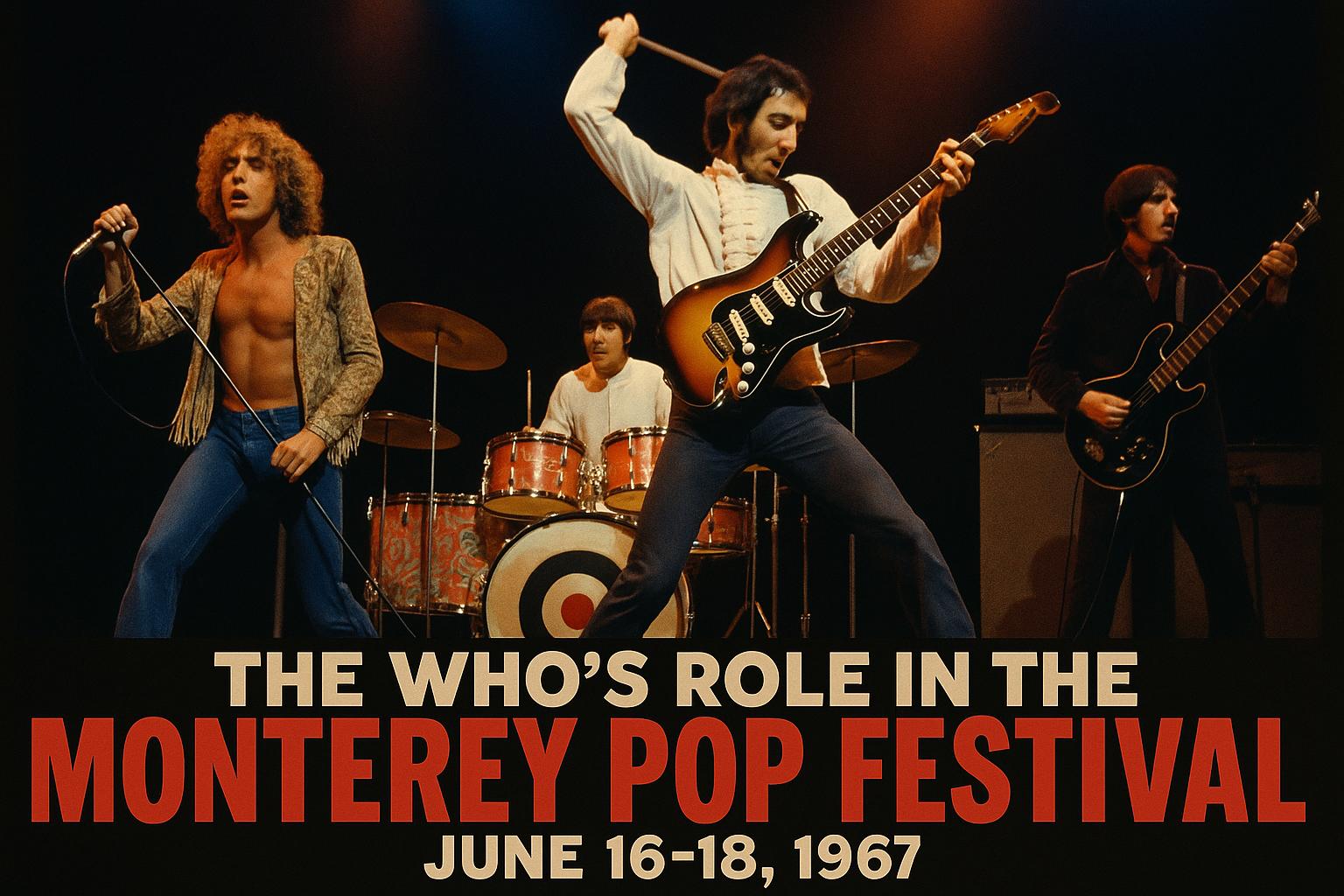
The Who at the Monterey Pop Festival
The Monterey Pop Festival, held in June 1967, is regarded as a groundbreaking event in rock music history, marking the dawn of the “Summer of Love.” Amidst the various unforgettable performances was that of The Who, a British rock band that, at that time, remained relatively unknown in the United States. Their participation in this pivotal festival symbolized not just their introduction to the American audience but also a significant shift in the landscape of rock music.
The Who’s Arrival in the US
Breaking into the American music scene was not a simple endeavor during the late 1960s, especially for international acts like The Who. Although the band was steadily gaining popularity in the United Kingdom with hits such as “My Generation” and “Substitute,” their footprint across the Atlantic was relatively negligible. The Monterey Pop Festival offered an invaluable opportunity for The Who to introduce their unique sound and energetic stage presence to an eager and diverse audience. Until this point, American audiences had limited exposure to the band, making this performance a critical moment in expanding their influence and reach.
Performance
The Who’s set at the Monterey Pop Festival was nothing short of electrifying. Known for their high-energy performances and theatrical flair, the band captivated the audience with a selection of their early hits. Lead guitarist Pete Townshend’s explosive performance, including his guitar-smashing antics, and Keith Moon’s dynamic drumming style captured the spectators’ attention in ways previously unseen. These elements were emblematic of The Who’s signature style, blending rock and roll with theatrics, contributing significantly to the live rock performance standards.
The selection of songs for their Monterey set served to introduce the American audiences comprehensively to the band’s range and style. It showcased their ability to blend musical innovation with raw, compelling energy, a combination that distinguished them from other acts of the time. Pete Townshend’s unique approach to his guitar, using it not just as an instrument but as a vehicle for artistic expression, helped convey the band’s rebellious energy.
Climactic Conclusion
The climax of The Who’s performance was perhaps one of the most memorable spectacles of the festival. As the final song concluded, Pete Townshend famously smashed his guitar in a spectacular display. This particular act was not merely about destruction or chaos. Instead, it symbolized the band’s defiance against the traditional and conservative norms prevalent in the music industry during that era. The destruction of the guitar was an artful act, reflecting the group’s dynamic stage presence and audacious approach to music and performance.
This climactic conclusion left a lasting impression on all who were present, securing The Who’s position as an essential and transformative force in rock history. It underscored their capability to not only perform music but also deliver a visual and emotional experience that resonated with young audiences seeking change and rebellion against mainstream conventions.
Impact
The Who’s appearance at the Monterey Pop Festival had far-reaching implications for their career. Introducing their distinctive combination of raw energy and musical innovation to an American audience marked a turning point. The exposure helped the band achieve significant success in the United States, paving the way for future tours and solidifying their place in the burgeoning rock culture. Moreover, the performance played a vital role in bridging the gap between American and British rock scenes, fostering a cross-pollination of musical ideas that would define the era.
In the wake of their Monterey performance, The Who embarked on a series of tours across the United States, further embedding themselves into the American musical landscape. Their success at the festival provided a launching pad from which the band could reach even larger audiences and engage with the rapidly evolving rock music culture of the 1960s, which was characterized by experimentation and a departure from traditional musical norms.
Legacy
The Monterey Pop Festival, with The Who’s performance, stands as a pivotal moment in the history of rock music. The band’s dynamic show set a high standard for live performances in the genre and underscored their place among legendary artists of the era. Beyond merely establishing a standard, the festival itself contributed to the emergence of a counterculture movement that sought new, experimental, and often radical forms of art and expression. The Who’s influence can be seen in the way modern music arts approach live performances, aiming to create not just an auditory experience but a complete sensory engagement.
The legacy of The Who at the Monterey Pop Festival is more than their musical output. It’s about their audacity to challenge norms and their role in fostering an environment where music could be as much about visual storytelling and expression as it was about sound. This paved the way for future musicians to explore and push boundaries, contributing to the rich and diverse landscape of modern music.
Further Information
For those interested in diving deeper into The Who and their influence during the Monterey Pop Festival, numerous resources can provide broader historical context of the 1960s rock scene. Documents and documentaries focusing on the festival offer insights into its impact on music and culture. Events like the Monterey Pop Festival served not only as a platform for established musicians but as an introduction for rising stars to share their talents on an international stage. Such festivals continue to be a pivotal aspect of the music industry, offering a showcase for innovative and groundbreaking performances that challenge and redefine musical boundaries.
