
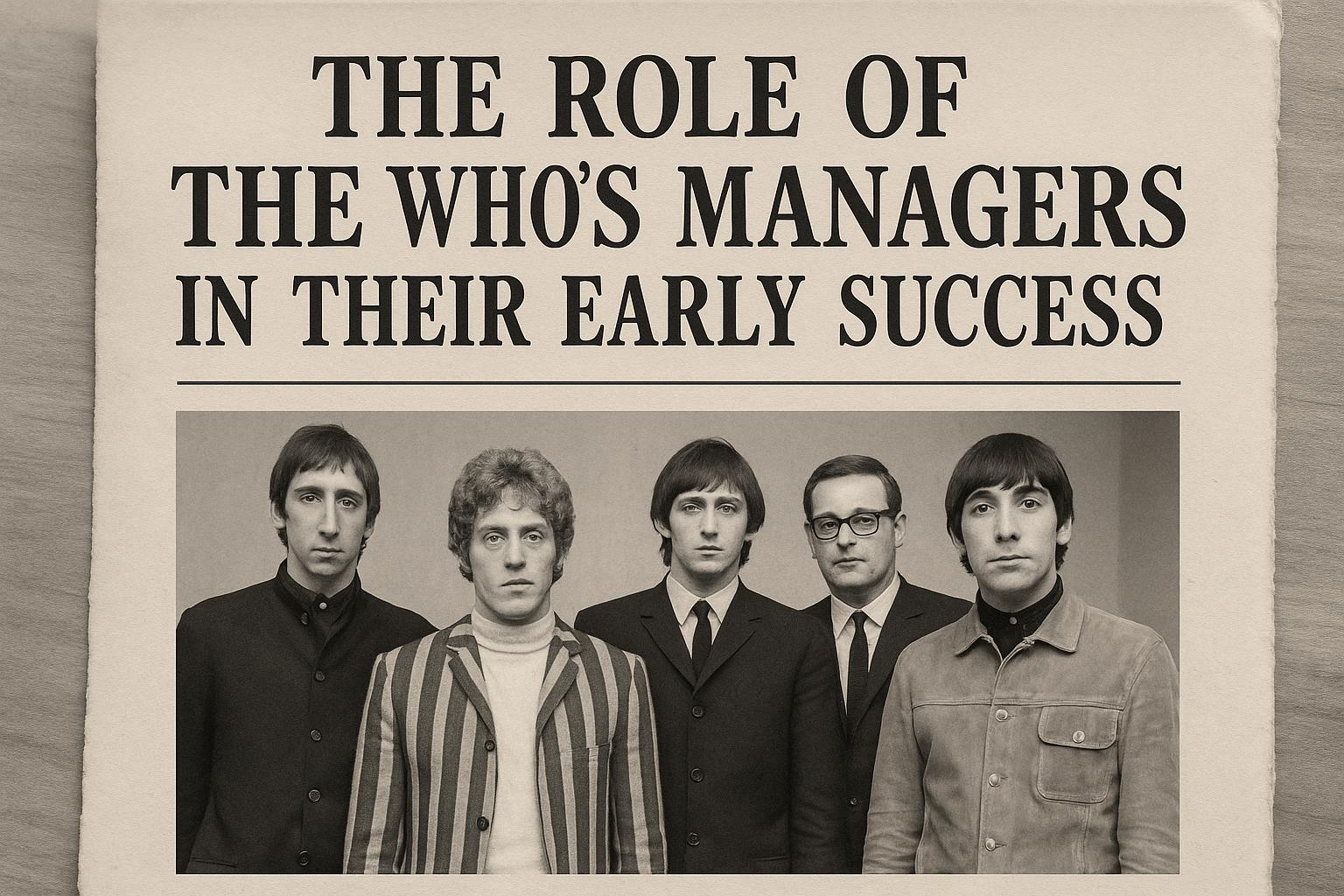
The Early Days of The Who
The Who, widely recognized as one of the most legendary rock bands of the 20th century, emerged during a period of immense musical innovation in the 1960s. This was a time when rock music was rapidly evolving, influenced by cultural shifts and technological advancements. While the undeniable musical talent of the band members—Roger Daltrey, Pete Townshend, John Entwistle, and Keith Moon—played a substantial role in their early success, the strategic vision and management provided by individuals like Kit Lambert and Chris Stamp were equally critical. These managers were not just behind-the-scenes figures; they were instrumental in shaping the band’s career trajectory, public image, and sound.
Management and Guidance
In the high-stakes world of rock music, where trends are fleeting and public attention is hard-won, effective management can be the deciding factor between success and fading into obscurity. Kit Lambert and Chris Stamp were two individuals whose foresight and innovative approaches to management were pivotal in crafting the success story of The Who. At that time, the band was in the process of discovering and refining its musical identity, exploring who they were as artists and what they wanted to communicate through their music.
These managers were not ordinary; they shared a background in film and the arts, which provided them with unique perspectives on marketing and promoting the band. Their understanding of visual storytelling allowed them to approach The Who’s image in a way that traditional music managers might not have considered. By blending their cinematic insights with business acumen, they crafted a narrative around The Who that resonated with the youth of the 1960s, engaging with the cultural zeitgeist and aligning the band with the rebellious spirit of the era.
Kit Lambert’s Visionary Approach
In the context of artistic direction and production, Kit Lambert’s contributions were particularly noteworthy. He was not only a manager but also a mentor who encouraged Pete Townshend to experiment with creative formats, such as concept albums. This encouragement led to the creation of Tommy, one of the seminal works in The Who’s discography. Lambert recognized Townshend’s potential for storytelling and thematic exploration, which was crucial in crafting the band’s reputation for artistic innovation.
Lambert’s approach to music production was unconventional for the time. He was interested in pushing the boundaries of what rock music could convey, both sonically and thematically. By supporting Townshend’s vision and encouraging the band to step into uncharted creative territories, Lambert helped establish The Who as pioneers in rock music. This not only differentiated The Who from their contemporaries but also cemented their place in the annals of music history as a band unafraid to take artistic risks.
Chris Stamp’s Innovative Marketing
While Lambert concentrated on honing the band’s artistic output, Chris Stamp was a mastermind in branding and audience engagement. His astute understanding of youth culture and its subcultures was instrumental in shaping The Who’s public image. At a time when societal norms were being questioned and redefined, Stamp’s marketing strategies emphasized the band’s rebellious spirit and high-energy performances. This alignment with the disenchanted youth of the era allowed The Who to cultivate a substantial fan base, both in the United Kingdom and internationally.
Stamp’s innovative marketing techniques involved engaging directly with the audience in ways that had not been done before. By turning The Who’s natural charisma and on-stage dynamism into a brand, he was able to create a lasting connection with the fans. This connection was not just about selling records; it was about establishing a cultural link, where the band became a voice for a generation eager for change and expression.
Collaboration and Conflict
Despite the fruitful partnership between Lambert and Stamp, it was not without its share of challenges. Their differing perspectives on how best to manage the band’s direction occasionally resulted in conflicts. Lambert’s emphasis on artistic integrity sometimes clashed with Stamp’s focus on marketability and commercial success. However, these differences ultimately proved beneficial. The tension between art and commerce laid a strong foundation for The Who’s enduring success, allowing them to appeal to a broad audience while earning critical acclaim.
The dynamic between Lambert and Stamp highlighted the importance of having vision-driven management in the music industry. Their ability to combine innovative marketing with artistic foresight helped The Who navigate the often-turbulent waters of the music business. Their strategic guidance amplified the band’s innate talent, ensuring that The Who did not just survive but thrived during one of the most competitive eras of rock music.
The legacy of Lambert and Stamp’s managerial roles is a testament to how strategic insight and creative management can propel a talented group from relative obscurity to international stardom. By understanding the nuances of both the music industry and the cultural moment, they crafted a path for The Who that not only captured the spirit of the time but also ensured that their music would endure for generations. Their contributions significantly shaped the trajectory of The Who and demonstrated that a strong managerial foundation is indispensable in building and sustaining the success of any artistic endeavor.
